Ukrainian defence-tech companies: Managing corruption and fraud risks in global partnerships
GoodBlog | read time: 5 min
Published: 22 January 2026
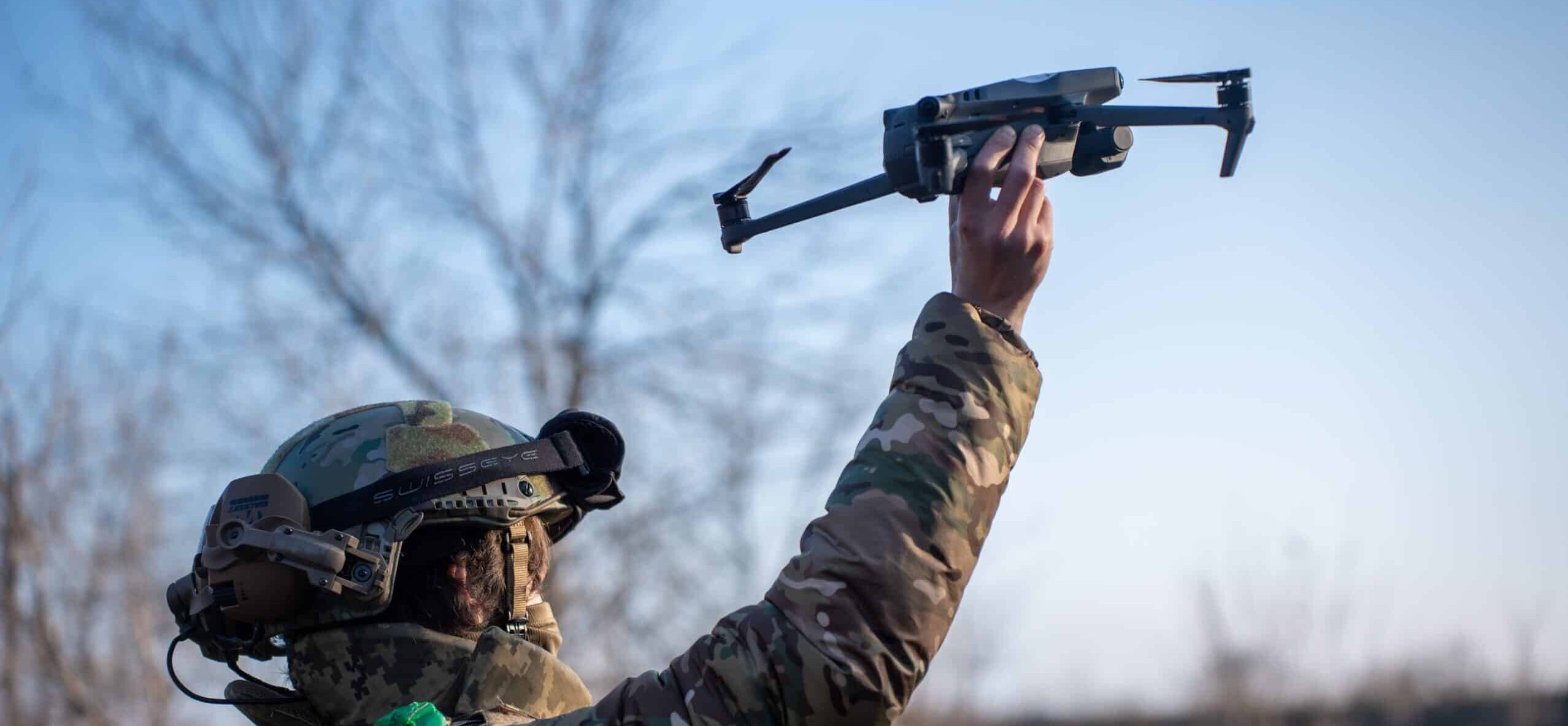
Since February 2022, Ukrainian defence-tech companies have been operating on a completely new footing. The full-scale war has transformed how defence products are designed, built and managed, compressing development cycles to meet the demands of conflict. The ability for rapid deployment is the new priority. Innovation now happens in real time, driven directly by events on the battlefield, under constant time pressure and shifting threats.
Meanwhile, Ukraine has also been implementing operational reforms that matter to international partners: corporatising defence enterprises, streamlining export licensing, and aligning regulatory frameworks with EU standards. As a result, a defence-tech sector has started to emerge that is attracting the attention of partners in the EU, the UK and Northern Europe, leading to pilot projects, procurement discussions and early-stage industrial cooperation.
This interest is grounded in deployment capability. Ukrainian systems come with something most defence products lack, namely actual combat data that partners can use to assess performance, adaptability and reliability.
Practical experience as a competitive advantage
Ukrainian defence-tech developers have a key advantage: engineering teams are working directly with military units, getting real-time feedback and adjusting hardware or software accordingly.
In the unmanned systems sector, several companies have moved from initial prototype to operational deployment within weeks. Adjustments to navigation logic, electronic-warfare resilience and range have followed successive unit rotations. Comparable development cycles in many Western defence programmes typically extend over several years.
Electronic-warfare technologies follow a similar pattern. Ukrainian suppliers regularly update system software as adversary tactics evolve.
Cost, performance and scaling speed
Cost and operational effectiveness shape early commercial and procurement decisions for international partners. Ukrainian solutions are often priced below Western equivalents while delivering comparable, and in some cases superior, performance. For European customers facing budgetary pressure and accelerated rearmament timelines, this balance is commercially significant.
Ukrainian manufacturers have scaled production under wartime conditions. They have opened additional production lines, secured private investment and relocated some manufacturing to partner jurisdictions. This reduces logistical exposure and supports integration into Western supply chains. Joint drone production in the United Kingdom, service centres for Ukrainian equipment within the EU and Ukrainian components in Western defence platforms already exist. These arrangements show Ukrainian companies can operate within Western contractual, quality and compliance frameworks.
Where compliance challenges begin
However, entry into international markets requires operating within regulatory environments that set stringent expectations for transparency, corporate governance and anti-corruption compliance. Compliance challenges, especially around licensing, export controls and third-party oversight need to be addressed. Exporting military and dual-use goods requires authorisation from national authorities. When products include foreign-origin components, additional re-export control regimes also kick in.
Licensing processes can drag on for months, which directly affects delivery schedules and contract negotiations.
Foreign partners typically run extensive due diligence checks before entering commercial arrangements. This goes well beyond financial standing to cover ownership structures, including ultimate beneficial ownership, potential links to politically exposed persons, prior litigation and any reputational exposure. The smallest documentation gaps or unclear internal procedures can delay or stop discussions entirely.
Anti-corruption requirements in the United Kingdom and across the EU leave little room for error. UK legislation, including the Bribery Act, creates liability not just for direct bribery but also for improper payments made through agents, consultants or intermediaries. You can be held liable if you don’t have adequate procedures in place, even if senior management had no idea the misconduct was happening.
Regulatory attention is also shifting towards fraud prevention. In the United Kingdom, a new corporate offence of failure to prevent fraud came into force on 1 September 2025. Under this regime, a company can be held criminally liable if an employee, agent or associated person commits fraud to benefit the business, unless it can show reasonable prevention procedures were firmly in place.
This means being able to demonstrate that proportionate and effective controls operate in practice, including risk-based assessments, third-party due diligence, transaction monitoring, segregation of duties, conflict-of-interest management as well as targeted training and the use of credible internal reporting mechanisms.
International partners focus less on the existence of policies and more on how fraud and corruption risks are managed in day-to-day operations. In the defence sector, evidence of implementation is often a condition for progressing negotiations.
During due diligence, partners frequently seek clarity on how agents and distributors are selected and monitored, how commission payments are structured and approved, and which controls protect against contract manipulation.
In GoodCorporation’s experience, otherwise promising transactions often stall at this stage due to gaps in third-party due diligence, opaque commission arrangements, purely formal conflict-of-interest declarations or the absence of effective internal reporting. In several cases, partners have indicated explicitly that negotiations could not continue without basic anti-corruption and anti-fraud controls in place.
Exposure is not limited to misconduct in the country where a contract is performed. Under UK and EU enforcement regimes, corruption or fraud committed in Ukraine or in any other jurisdiction can still trigger liability where there is a sufficient nexus to the company or its partners.
Common risk areas
Defence and defence-tech activities have a distinct corruption and fraud risk profile and wartime conditions make this worse. The National Agency on Corruption Prevention’s recent analysis of unmanned aerial vehicles (UAV) and electronic-warfare procurement found that risks come from high-value contracts and close ties with public authorities, but also from rushed procurement timelines, broad discretion in planning and pricing, and heavy reliance on intermediaries and multi-layered supply chains. In one case, UAV suppliers funnelled components through intermediary companies to jack up prices and get around profit caps, exploiting the fact that pricing controls were weak and verification was minimal.
Procurement and contracting
Defence procurement often involves complex technical specifications, limited competition and significant discretion – opening the door to manipulated requirements, informal influence over evaluation or award decisions, and weak audit trails across subcontracting chains.
Agents, intermediaries and consultants
Using agents or local representatives remains one of the highest risk areas, especially where beneficial ownership is unclear or commission structures don’t match the services provided.
Industrial cooperation and localisation arrangements
Joint production, technology transfer or localisation deals can create integrity risks when it’s unclear who’s responsible for what, or when oversight is weak.
Conflicts of interest and revolving door
Defence markets work with a small pool of officials and specialists. That means personal or financial interests that aren’t disclosed can easily influence decisions.
Financial controls and fraud exposure
Beyond bribery, defence partnerships face heightened fraud risks associated with milestone‑based payments, accelerated procurement, and rapid organisational growth.
Secrecy and restricted transparency
While confidentiality is inherent to defence activity, excessive reliance on secrecy can obscure misconduct where decisions are poorly documented, or compliance functions lack access.
How GoodCorporation can help
GoodCorporation helps organisations operating in high-risk environments, including Ukraine, to design, build, embed and assess integrity systems that meet international standards and enforcement expectations. Defence-sector engagements begin with an independent corruption-risk assessment: reviewing documentation, analysing business processes and interviewing key personnel. The outcome is a risk register with prioritised recommendations. Training is central to this work including sessions for senior management, sales teams, procurement and technical specialists built around realistic scenarios.
Ukrainian defence-tech companies have become serious commercial and strategic partners for Europe and the United Kingdom. Their products are shaped by real operational requirements and evolving security threats. Sustainable cooperation depends on demonstrable integrity and the effective operation of anti-corruption and anti-fraud controls.
Contact us for more information or visit our anti-bribery and integrity compliance webpages

Viktor Soloviov
Senior Consultant and NATO-certified Anti-Corruption Expert